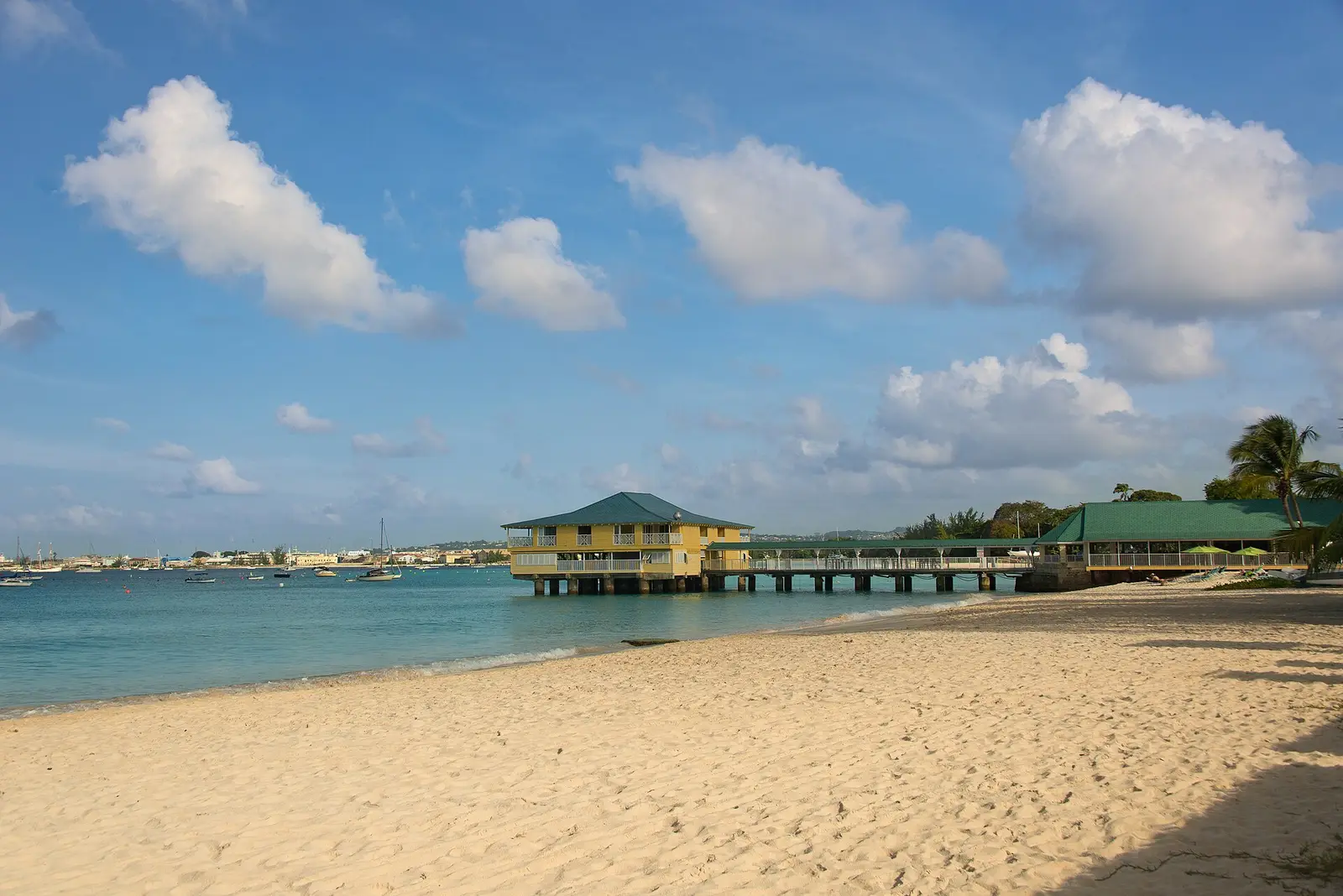
 BarbadosPhoto: Barry haynes · CC BY-SA 4.0
Barbados · North America
Best time to visit Barbados
Barbados offers fine beaches on a calm Caribbean side and a wilder Atlantic side. Driest from December to May; more rain from June to November.
Best months by travel type
Month by month
Overall suitability per month. Tap a month for details.
Best time to visit Barbados: the overview
Barbados bietet feine Strände an ruhiger Karibik- und rauerer Atlantikseite. Am trockensten von Dezember bis Mai; von Juni bis November fällt mehr Regen.
Barbados carries an average daytime temperature of about 28 °C across the year, which makes the climate warm on the whole. Warmest is September at around 29 °C by day, while February is the coolest month at roughly 27 °C. The overall climate score for the destination is 78 out of 100.
Purely on climate, the most rewarding months are January, February, March and April. All values on this page are historical monthly averages rather than a forecast, so treat them as the typical pattern you can plan around, not a guarantee for a specific week.
As a coastal destination in Nordamerika, Barbados follows the seasonal rhythm you would expect for its latitude, and the guide below breaks that rhythm down season by season, then by rain, sun, sea and travel style so you can match the month to what you actually want from the trip.
Barbados season by season
spring (March to May) is warm at around 28 °C by day and mostly dry with about 5 rainy days per month. Nights cool to about 26 °C. The sea averages around 27 °C. This stretch suits beach and swimming days.
summer (June to August) is warm at around 28 °C by day and rainy with about 12 rainy days per month. Nights cool to about 27 °C. The sea averages around 28 °C. This stretch suits city breaks and active trips without the heat.
autumn (September to November) is hot at around 29 °C by day and rainy with about 13 rainy days per month. Nights cool to about 28 °C. The sea averages around 29 °C. This stretch suits city breaks and active trips without the heat.
winter (December to February) is warm at around 27 °C by day and changeable with about 7 rainy days per month. Nights cool to about 26 °C. The sea averages around 27 °C. This stretch suits sightseeing, hiking and long days outdoors.
Daytime, nights and humidity
Day and night can feel quite different here. In the warmest month, September, days reach about 29 °C while nights ease to around 28 °C, a spread of roughly 1 degrees. The mildest nights come in September (about 28 °C), the coolest in February near 26 °C, so a light layer for the evening is worth packing outside high summer.
Relative humidity averages about 78 percent across the year, which is humid, so heat feels stronger than the numbers suggest. Humidity shapes how warm a given temperature actually feels, so it is worth weighing alongside the raw degrees.
Rain and sun through the year
Across the year Barbados records roughly 112 rainy days. The wettest month is October with about 14 rainy days, the driest is March with around 4. If low rain is your priority, the run of months around March is the safest bet. With a gap of roughly 10 rainy days between wettest and driest, the year has a clear wet and dry rhythm.
Sunshine peaks in April at about 8 hours a day and bottoms out in November near 6 hours. Longer days naturally line up with the drier, warmer part of the year.
Sea temperature and swimming
The sea is warmest in September at about 29 °C and coolest in February near 27 °C. Comfortable swimming, from roughly 21 °C, is realistic in January, February, March, April, May, June, July, August, September, October, November and December, and the water turns genuinely warm (24 °C or more) in January, February, March, April, May, June, July, August, September, October, November and December. Remember the sea lags the air by a few weeks, so early summer can feel warm on land while the water is still catching up.
Which trip fits which month
The same destination rewards different trips at different times. Based on the predefined monthly scores for Barbados:
Beach and swimming: the climate works best in January, February, March and April, when warm days and a swimmable sea line up.
City breaks and sightseeing: the climate works best in January, February, March and April, when temperatures are comfortable for walking without oppressive heat.
Hiking and active trips: the climate works best in January, February, March and April, when it is cooler and drier, better for effort.
Family holidays: the climate works best in January, February, March and April, when gentle warmth and low rain keep it relaxed with kids.
Practical tips for the climate
For packing, plan around light clothing.
If flexibility on dates is an option, the shoulder weeks just before and after the peak months tend to offer the best balance of good weather, lower prices and fewer crowds. The wetter stretch around October is worth planning around if rain would spoil your plans, while the driest window near March is the safest for outdoor days.
When to go, and when to skip
If you want the most reliable conditions, aim for January, February, March and April. The shoulder around these months usually keeps most of the upside with thinner crowds and lower prices. February is the least typical month for a warm-weather trip here, though it can still suit a city break or a quiet off-season stay. Match the month to your priority, whether sun, sea, low rain or sightseeing comfort, using the month-by-month table above.
In short, there is rarely a single right answer: Barbados shifts character across the year, and the best month is the one that lines up with the kind of trip you have in mind. Use the seasonal breakdown and the scores above to make that call with the numbers in front of you.
Similar destinations
Frequently asked questions
When is the best time to visit Barbados?
Climatically the most favourable months are January, February, March, April. Values are historical averages, not a forecast.
When is Barbados warmest?
It is warmest in September, at around 29 °C by day.
When is the sea warmest at Barbados?
The highest sea temperature is reached in September, at about 29 °C.